Source Column Chromatography Silica Gel for Filtration, Electronics, and Coatings
Compare 11 listings for column chromatography silica gel suitable for filtration media, electronics, and coatings. Buyers can review specifications like pore size, particle size, and packing options from verified Chinese suppliers.
Key considerations
Products List


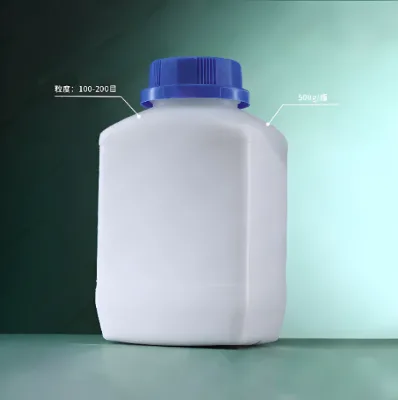
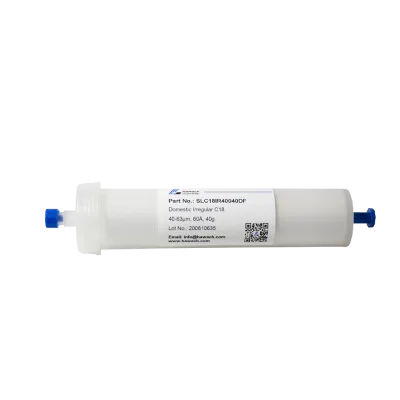
Comprehensive Sourcing Guide
Strategic Sourcing Guide for Column Chromatography Silica Gel
Understanding Technical Specifications and Material Grades
When sourcing column chromatography silica gel, the primary objective is to identify materials that offer consistent particle size distribution, predictable pore structures, and high chemical purity. The supplied product data indicates that the market offers silica gel in various forms, including powder, beads, and specific models designated for chromatography. Buyers must distinguish between general industrial grades and those specifically engineered for analytical or preparative chromatography. The data highlights a "Chromatography Silica Gel" model, which suggests a specialized formulation distinct from standard desiccants.
Particle size is a critical determinant of separation efficiency. The observed specifications list ranges such as 40-63 micrometers (um) and mesh sizes including 60-100, 100-200, 70-230, 230-400, and even 400-1000 mesh. In column chromatography, smaller particle sizes generally provide higher resolution but increase backpressure, while larger particles allow for faster flow rates. Buyers should verify that the specific mesh or micrometer range matches their column dimensions and pressure capabilities. Furthermore, the pore size is equally vital; the available data lists pore diameters of 60A and 90A, as well as a broader range of 30, 60, 90, and 120 Angstroms. The choice between 60A and 90A often depends on the molecular weight of the analytes being separated, with larger pores accommodating larger molecules.
Purity is another non-negotiable technical parameter. The provided facts mention purity levels of 99% and 0.99, alongside a Silicon Dioxide content of greater than 98.5%. For high-sensitivity applications, such as pharmaceutical analysis or fine chemical synthesis, the presence of trace metals or impurities can skew results. The data also notes a "No Salt Oxide" classification and a pH value of 4, which indicates the surface acidity of the silica. This acidity can influence the interaction with basic compounds, potentially causing tailing in chromatograms. Buyers must confirm whether the specific batch maintains these pH and purity specifications, as variations can significantly alter separation outcomes.
Compliance, Certification, and Regulatory Verification
Navigating the regulatory landscape for chemical procurement requires rigorous verification of certifications and documentation. The product facts indicate that suppliers may hold ISO certifications, Dgm (Deutsche Gesellschaft für Materialprüfung) standards, and MSDS (Material Safety Data Sheet) availability. Additionally, SGS inspection is noted as available upon request. These documents are not merely formalities; they are essential for ensuring that the silica gel meets international safety and quality benchmarks.
ISO certification implies that the manufacturer adheres to a standardized quality management system, which is crucial for maintaining batch-to-batch consistency. However, buyers should not assume that every listed product automatically possesses these certifications. Instead, the presence of "ISO: Approved" and "SGS: Available Upon Request" in the data suggests that these are conditional attributes. Procurement teams must explicitly request the specific ISO certificate number and the most recent SGS test report for the lot intended for purchase. The Dgm certification, while less common in general trade, signals compliance with specific German material testing standards, which can be a proxy for high-quality control in industrial applications.
The MSDS is a fundamental requirement for logistics and safety compliance. It details the hazards associated with handling silica gel, including dust inhalation risks and potential reactivity. Since the product is classified as "Silicon Dioxide" and "No Salt Oxide," the MSDS will clarify the specific handling procedures required to mitigate these risks. Furthermore, the "Industrial and Reagent" grade classification suggests that the product may be suitable for both general industrial use and higher-purity reagent applications. Buyers must verify which grade standard applies to their specific order, as reagent-grade materials typically undergo more stringent testing for trace impurities than industrial-grade equivalents. The "Grade Standard: Industrial Grade" mentioned in the data serves as a baseline, but for chromatography, a higher specification may be necessary.
Cost Drivers and Pricing Dynamics
The cost of column chromatography silica gel is influenced by a complex interplay of factors, including particle size, pore structure, purity, and packaging. The observed price range in the market data spans from 1 to 100 USD, but this wide variance likely reflects differences in product specifications rather than a single uniform pricing model. Smaller particle sizes and more precise pore size distributions (e.g., specific Angstrom values) typically command higher prices due to the additional processing required to achieve such uniformity. Similarly, higher purity levels, such as the 99% or 0.99 purity noted, add to the production cost.
Packaging also plays a significant role in the final cost. The data lists various packaging options, including 20kg bags, 25kg drums, 450kg jumbo bags, and 500kg super sacks. The choice of packaging affects both the unit price and the logistics cost. For instance, a 25kg drum may be more expensive per kilogram than a 450kg jumbo bag due to the higher material and handling costs of smaller units. However, for buyers with limited storage space or those requiring smaller batch sizes, the smaller packaging options are essential despite the higher per-unit cost.
The Minimum Order Quantity (MOQ) is another critical cost driver. The observed MOQ range is 1 to 1000, with a specific mention of 100kg as a standard MOQ. Buyers must align their order volume with these thresholds to avoid penalties or price surcharges. Negotiating the MOQ can be a strategic move, especially for smaller laboratories or startups that do not require bulk quantities. The data also notes that payment terms can be negotiated, which can impact cash flow and overall financial planning. Buyers should consider the total cost of ownership, including shipping terms like FOB, CIF, CFR, EXW, and DAP, as these determine who bears the risk and cost of transportation.
Typical Applications and Usage Scenarios
Column chromatography silica gel serves a diverse range of applications, from analytical chemistry to large-scale industrial processing. The primary application identified in the data is "Filter Media" and "Filtering Medium," which underscores its role in separating solid particles from fluids or separating components within a mixture. In the context of chromatography, this separation is based on the differential adsorption of compounds onto the silica surface.
The data explicitly lists applications in the "Electronics" and "Coatings" industries. In electronics manufacturing, silica gel is often used as a desiccant to protect sensitive components from moisture, but in a chromatography context, it may be used for purifying solvents or separating electronic-grade chemicals. For the coatings industry, silica gel can act as a thickening agent, anti-caking agent, or glidant, improving the flow properties of paints and inks. The "Usage" field also mentions "Glidant," "Emulsion Stabilizer," and "Anticaking Agent," indicating that the material has multifunctional properties beyond simple filtration.
In laboratory settings, the "Chromatography Silica Gel" model is specifically designed for separating complex mixtures. The particle size and pore diameter determine the resolution of the separation. For example, a 60A pore size might be ideal for separating small organic molecules, while a 90A or 120A pore size would be better suited for larger biomolecules or polymers. The "Appearance" being listed as "Powder" or "Beads" also dictates the application method; beads are often preferred for column chromatography to ensure uniform flow and prevent channeling, whereas powders might be used in slurry packing or specific filtration setups.
Supplier Evaluation and Sourcing Strategy
Evaluating suppliers for column chromatography silica gel requires a systematic approach that goes beyond price comparison. The data indicates that the product origin is primarily "China," with specific mentions of "Qingdao" and "Jiangxi" as production locations. While these regions are known for silica gel production, buyers should verify the specific factory capabilities and quality control measures. The presence of "Customization: Available" is a significant advantage, allowing buyers to request specific particle sizes, pore structures, or packaging configurations that deviate from standard offerings.
When evaluating potential suppliers, buyers should prioritize those who can provide comprehensive documentation, including ISO certificates, MSDS, and SGS reports. The ability to negotiate payment terms and trading conditions (FOB, CIF, etc.) is also a key indicator of a flexible and experienced supplier. The data shows that the "Quality" is described as "First Class," but this is a subjective claim. Buyers must request independent test results to validate this assertion. Additionally, the "MOQ" of 100kg suggests that suppliers are geared towards medium-to-large volume orders. Smaller buyers may need to negotiate exceptions or find suppliers with lower MOQs to avoid overstocking.
The "Kind" of product is listed as "Silica-Gel Desiccant" and "Physical Desiccant," which can sometimes lead to confusion. Buyers must ensure that the supplier distinguishes between desiccant-grade silica gel and chromatography-grade silica gel. While both are made of silicon dioxide, the latter requires stricter control over surface chemistry and pore structure. The "Classification" as "Silicon Dioxide" and "No Salt Oxide" further confirms the chemical nature, but the specific application dictates the required grade.
Quality Control and Long-Term Procurement Considerations
Maintaining consistent quality in column chromatography silica gel is essential for reproducible results. The data highlights several quality indicators, such as "Bulk Density" of 750kg/M3, "pH Value" of 4, and "Size up to Grade" of greater than 90%. These parameters must be monitored closely during the procurement process. Bulk density affects the packing height of the column and the flow rate, while the pH value influences the chemical interaction with the analytes. The "Size up to Grade" metric indicates the proportion of particles that meet the specified size range, which is crucial for ensuring uniform column performance.
Long-term procurement considerations involve establishing a relationship with a supplier who can guarantee consistency over time. The "Standard" of 60-100/80-120/100-200/70-230/230-400mesh suggests a range of available specifications, but the buyer must ensure that the supplier can consistently deliver the exact mesh size required. Variations in particle size distribution can lead to channeling or poor separation efficiency. The "Drying Method" listed as "Static Drying" is also a factor; different drying methods can affect the surface area and pore structure of the silica gel.
Buyers should also consider the "Customization" aspect for long-term needs. If a specific application requires a unique pore size or particle shape, the ability to customize the product can be a significant competitive advantage. However, customization often comes with higher MOQs and longer lead times. The "Payment Terms: Can Be Negotiated" and "Trading Terms" flexibility can help mitigate these risks. Finally, the "Appearance" and "Shape" (Powder vs. Beads) should be verified for each shipment to ensure that the physical form matches the intended application. By focusing on these technical and logistical details, buyers can secure a reliable supply of high-quality column chromatography silica gel that meets their specific operational needs.
FAQs
What grades of column chromatography silica gel are available?
Industrial and reagent grades are available for this product. The data confirms options for both general industrial use and higher-purity reagent applications, ensuring suitability for diverse separation needs.
Which particle sizes can be selected for column chromatography?
Particle sizes range from 40-63 micrometers to various mesh sizes like 60-100 and 230-400 mesh. Buyers can select specific ranges to match their column dimensions and required separation resolution.
How is the silica gel packaged for shipment?
Packaging options include 25kg drums, 20kg bags, and 500kg super sacks. The specific packaging depends on the order volume and logistical requirements of the buyer.
Can suppliers provide ISO and SGS certifications?
ISO certification is approved, and SGS inspection is available upon request. Buyers should explicitly request these documents to verify quality management systems and independent test results for specific batches.
What is the minimum order quantity for this product?
The minimum order quantity is typically 100kg, though ranges from 1 to 1000 are observed. Buyers must align their order volume with these thresholds to avoid penalties or price surcharges.
Which pore sizes are offered for different analytes?
Pore sizes include 60A, 90A, and options ranging from 30 to 120 Angstroms. The choice depends on the molecular weight of the analytes, with larger pores accommodating larger molecules.
Where are the manufacturing facilities located?
Products originate from China, specifically from Qingdao and Jiangxi regions. These locations are known for silica gel production, but buyers should verify specific factory capabilities for quality control.